
AI Data Investing

Artificial Intelligence (AI) is rapidly changing the way people invest. AI technologies are now capable of analyzing vast amounts of financial data, spotting patterns, and predicting market trends with a high degree of accuracy. This technology is transforming the investment industry, making it more efficient, and providing investors with new opportunities. However, like any new technology, AI also comes with potential drawbacks that need to be addressed.

Pros of AI in Investing

  • Improved Decision Making: AI can analyze large amounts of data much faster than humans, which can lead to better decision-making. With AI, investors can process a vast amount of data and make more informed investment decisions.
  • Cost Savings: AI technology can save money for investors by automating many of the tasks that were previously done by humans. This can lead to lower fees and increased efficiency.
  • Increased Accuracy: AI can help investors identify patterns and trends that may not be apparent to humans. By analyzing vast amounts of data, AI can detect anomalies and provide insights that can help investors make better investment decisions.
  • Personalization: AI can be used to create personalized investment strategies for individuals. By analyzing an individual’s financial data and investment preferences, AI can provide recommendations that are tailored to their specific needs.

Cons of AI in Investing

  • Bias: AI algorithms can be biased, and the data used to train these algorithms can reflect historical biases. This can lead to biased investment decisions, which can negatively impact investment outcomes.
  • Lack of Human Oversight: AI can be programmed to make decisions based on specific rules and parameters. However, it may lack the ability to adapt to unexpected market events or changes in investment strategies.
  • Over-Reliance: Investors may become over-reliant on AI technology and fail to consider other factors that may impact investment decisions.
  • Complexity: AI technology can be complex, and not all investors may understand how it works. This can lead to a lack of trust in the technology and reluctance to use it.

Impact of AI on Investing in the Future

The impact of AI on investing in the future is likely to be significant. AI will continue to transform the investment industry, making it more efficient and providing investors with new opportunities. AI technologies such as machine learning, natural language processing, and predictive analytics will enable investors to analyze large amounts of data and make more informed investment decisions.

AI will also create new investment opportunities, such as investing in AI companies or investing in AI-driven investment strategies. However, there are also potential drawbacks that need to be addressed, such as bias, lack of human oversight, over-reliance, and complexity.

In conclusion, AI has the potential to transform the investment industry, making it more efficient and providing investors with new opportunities. However, investors need to be aware of the potential drawbacks of AI technology and ensure that they have appropriate safeguards in place to address these risks. By doing so, investors can take advantage of the benefits of AI while mitigating potential risks.

ENVIRONMENTAL, SOCIAL AND GOVERNANCE (ESG)

A most promising area of growth is sustainable finance where singapore aspire to support Asia’s transition to a low carbon economy. 


  • The task of reducing emissions is urgent, as pointed out by the most recent report of the United Nations Intergovernmental Panel on Climate Change.
  • All sectors of the economy need to achieve progressive and deep emission reductions.
  • Some US$2 trillion in infrastructure investments will be needed over the next decade to enable Southeast Asia’s transition towards sustainabilityBain & Company, Microsoft and Temasek, Southeast Asia’s Green Economy: Opportunities on the Road to Net Zero, 2021..

Developing strategies to build a comprehensive ecosystem for green and transition financing.


  • Aligning financing efforts with credible sectoral transition plans, that provide clarity about transition pathways and carbon emission targets. This in turn generates investor confidence and catalyses greater sustainable finance flows.
  • Promoting blended finance solutions, where targeted risk sharing by governments or multilateral development banks can crowd in private capital more effectively.
  • Stepping up efforts to enhance collection of emissions data, develop credible transition taxonomies, and implement consistent climate-related reporting and disclosure standards.
    • One key initiative which MAS has embarked on with the industry is Project Greenprint, which comprises common utility platforms.
    • These platforms will harness technology to address the financial sector’s sustainability data needs, and enable a more transparent, trusted and efficient ESG ecosystem that can catalyse green and sustainable finance.

One of the most encouraging aspects of the strong growth of the financial sector is the number of good jobs that are being created.


  • MAS estimates that there will be more than 9,400 new hiring opportunities for permanent roles in the financial sector in 2022MAS-IBF Employment Outlook Survey 2022..
  • More than 3,000 jobs will be in technology.
    • Software developers and engineers continue to have the highest demand, with more than 700 opportunities.
    • They support a wide range of exciting activities, such as designing and developing digital finance services; applying blockchain technology in trade finance; and using artificial intelligence to detect fraud and money laundering.
  • There will also be interesting new roles in sustainable finance.
    • These range from execution of ESG transactions to advisory services and product development.
    • Many of these jobs will draw on traditional finance expertise such as product structuring, risk management, reporting and pricing, but layered and infused with new knowledge on sustainability.

Climate change is a global existential challenge. Singapore, being a low-lying city state, is particularly vulnerable to the effects of climate change.

Singapore is fully committed to the global climate action, and will play its part as a responsible member of the international community.

In 2021, Singapore launched the Singapore Green Plan 2030 (“Green Plan”), a whole- of-nation movement to advance the national agenda on sustainable development. The Green Plan charts concrete targets over the next 10 years, strengthens Singapore’s commitments under the United Nations’ 2030 Sustainable Development Agenda and Paris Agreement, and positions us to achieve our long-term aspiration of net zero emissions.

The green transition will be a new engine for jobs creation and growth across the economy. This includes the greening of traditional sectors such as aviation, energy, and tourism, as well as the emergence of new sectors such as green finance, carbon services and low-carbon technologies. The Government will work in partnership with the private sector to provide an enabling environment for businesses and workers to take advantage of these new growth opportunities.

To support Singapore’s decarbonisation efforts and deepen Singapore’s green finance market, the Government announced at Budget 2022 that the public sector will take the lead by issuing up to S$35 billion of green bonds by 2030. This will include bonds issued by the Government as well as Statutory Boards.

These public sector green bond issuances will serve as reference for the corporate green bond market, deepen market liquidity for green bonds, and attract green issuers, capital, and investors. This paves the way for greater private sector green finance activity.


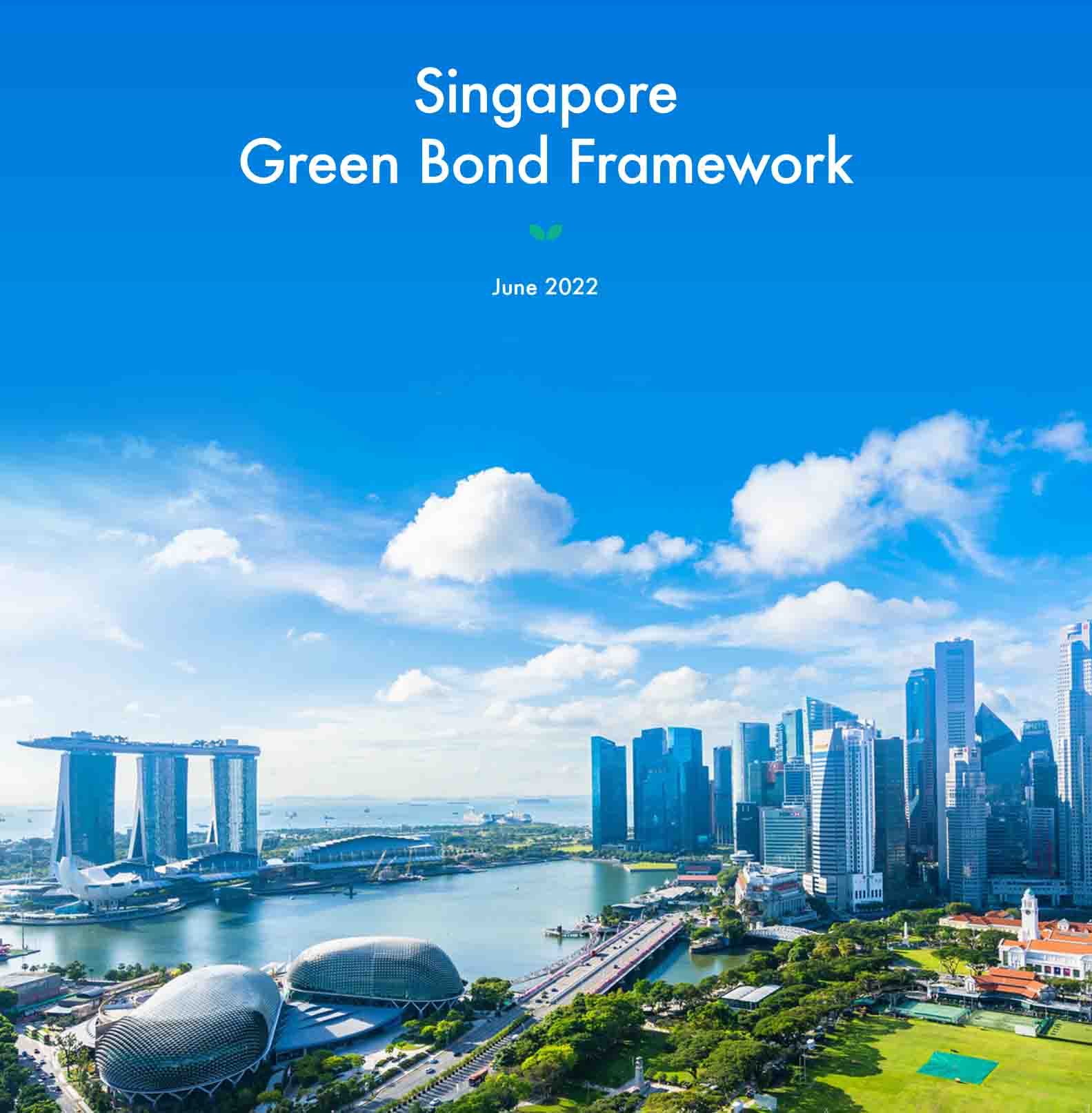
The Government has published a national Green Bond Framework (“Framework”), which lays the foundation for the issuance of green bonds by the Government under the Significant Infrastructure Government Loan Act 2021 (“SINGA”), and serves as a reference for Statutory Boards’ respective green bond frameworks.

Singapore Sovereign Green Bonds,
also known as Green Singapore Government Securities (“SGS”) (Infrastructure), will be used to finance major, long-term green infrastructure in Singapore that qualify under the Framework. Borrowing for such infrastructure spreads the costs across the generations that would benefit from these projects.

Examples of eligible green SINGA projects include the upcoming Cross Island Line and Jurong Region Line. Our rail network expansion will enhance connectivity and encourage more commuters to take mass public transport, which together with walking and cycling, are the greenest ways to move.


The Singapore Government will borrow prudently and adhere to stringent safeguards.

(a) In order to qualify for financing via Green SGS (Infrastructure), infrastructure projects will need to meet the high bar to qualify as nationally significant under SINGA, as well as the green eligibility criteria stated in the Framework.

(b) The issuance of such green bonds will be subject to the overall legislative gross borrowing limit and the annual effective interest cost limit under SINGA.

The gross borrowing limit of S$90 billion and annual effective interest cost threshold of S$5 billion apply to the overall SINGA programme, which comprises the issuance of both Green SGS (Infrastructure) and SGS (Infrastructure).


Overview of Singapore Government Borrowings Details on how Green SGS (Infrastructure) fits within the Singapore Government’s existing suite of borrowings.

Bonds & Bills – Monetary Authority of Singapore Details on Green SGS (Infrastructure) such as the issuance calendar, auction updates and bond return calculator.


Redomiciliation

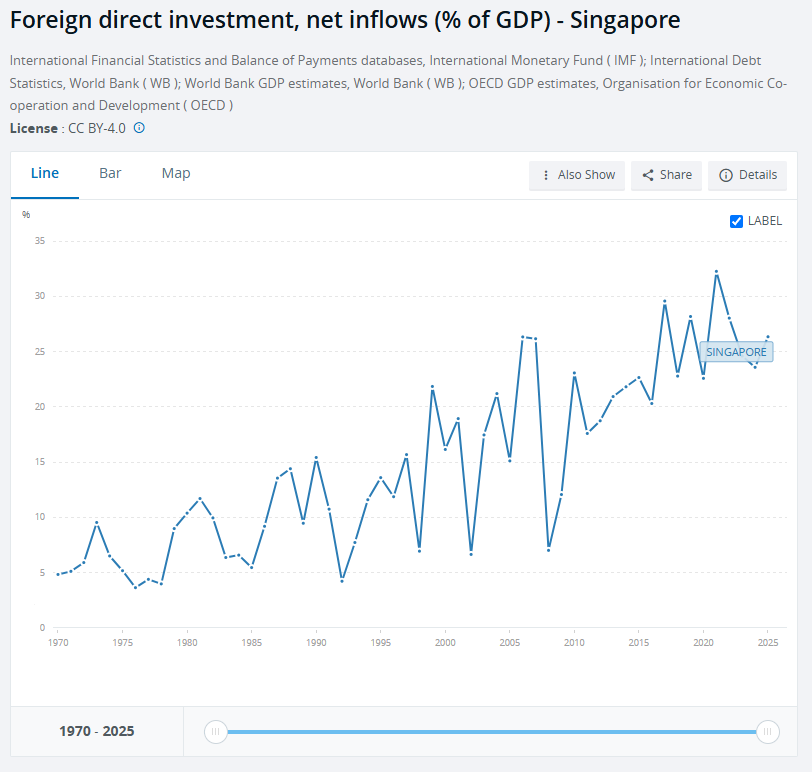
data.worldbank.org

Guide · Family offices in Singapore

Redomiciliation to Singapore family offices

Moving a family office structure to Singapore does not have to mean starting over. Redomiciliation lets an entity keep its history while gaining a new home. Here is how the process works.

Families managing wealth across several jurisdictions eventually face the same question. Should the holding structure stay where it was first set up, or should it move closer to where the family actually lives, invests, and plans for succession. For a growing number of families, the answer is Singapore, and the mechanism that gets them there without disrupting existing contracts, banking relationships, or corporate history is redomiciliation.

What redomiciliation actually means

Redomiciliation is a transfer of registration, not a liquidation and restart. A foreign corporate entity moves its place of incorporation to Singapore while remaining, in legal substance, the same entity. Contracts stay in force, assets and liabilities carry over, and the company’s track record moves with it. This matters for a family office, since banking relationships, credit history, and existing agreements do not need to be rebuilt from scratch.

Once the transfer completes, the entity is fully subject to Singapore law, including its tax rules, corporate governance requirements, and reporting obligations under ACRA and IRAS. There is no route back. Singapore’s regime does not currently allow an entity to redomicile out again to its original jurisdiction, so this is a considered, one way move rather than a trial run.

Why Singapore is the destination of choice

Singapore’s appeal for family offices rests on a few consistent pillars. Political and regulatory stability gives multi generational planning a firmer foundation. A deep private banking and wealth management ecosystem means the professional infrastructure, from custodians to legal counsel, is already in place. A competitive tax regime, paired with an extensive treaty network, gives structuring options that many other jurisdictions cannot match. And MAS provides a clear, well understood regulatory framework for family offices, which reduces the ambiguity that families often encounter elsewhere.

Who qualifies to redomicile

Not every entity is eligible. Singapore’s inward redomiciliation regime, introduced through the Companies Act, is built for established operating entities rather than dormant shell companies. To qualify, a foreign corporate entity generally needs to meet at least two of the following three conditions.

Total assets

The entity’s total assets exceed S$10 million.

Annual revenue

The entity’s annual revenue exceeds S$10 million.

Headcount

The entity employs more than 50 people.

Where the applicant is a parent company, these criteria are assessed on a consolidated group basis. The entity must also be solvent, able to pay its debts as they fall due, and able to show that its assets are not less than its liabilities, including contingent ones. A solvency statement from the directors, along with certified financial statements and constitutional documents, forms part of the application to ACRA.

These thresholds and family office tax conditions have been revised more than once in recent years. Always confirm the current figures with MAS and a qualified tax advisor before relying on them for planning purposes.

Auvene Fund Administration Services

Considering a move to Singapore

Auvene helps families assess whether redomiciliation or a fresh incorporation is the better fit, then manages the process from application through to ongoing administration.

Talk to Auvene

Where the family office structure fits in

For most families, the redomiciled entity is not the family office itself. It is usually the holding company or fund vehicle that sits above the investment portfolio, with a separate Singapore fund management company acting as the family office beneath it. That fund management company typically applies for tax exemption on qualifying investment income under Section 13O or Section 13U of the Income Tax Act, depending on the scale of assets under management and the complexity of the structure.

Both schemes carry conditions around minimum assets under management, the number of Singapore based investment professionals employed, annual local business spending, and, in many cases, a minimum amount of capital deployed into Singapore linked investments. These conditions have tightened over the past few years, and MAS reviews approved family offices on an ongoing basis rather than at a single point in time. Getting the structure right at the outset, and keeping it compliant afterward, is a genuine, continuing exercise rather than a one time filing.

Supporting the move

Redomiciliation and family office set up both involve a sequence of interdependent steps, and getting the order wrong can cost months. We can works alongside families and their existing advisors across the full arc of the process.

  • Structuring assessment. Reviewing whether redomiciliation, a new Singapore incorporation, or a VCC structure best fits the family’s existing entities and long term goals.
  • Application management. Coordinating the ACRA transfer of registration filing, solvency documentation, and supporting financial statements.
  • Family office formation. Setting up the Singapore fund management company, supporting the 13O or 13U application, and helping identify and onboard the required investment professionals.
  • Corporate secretarial and governance. Acting as company secretary, maintaining statutory registers, and supporting board and family governance processes.
  • CDD and investor onboarding. Running the AML and KYC checks that MAS expects to see in place from day one.
  • Ongoing administration. Handling accounting, financial reporting, regulatory filings, and the annual reviews that MAS conducts on approved family offices.

For families with existing structures in the Cayman Islands, the British Virgin Islands, or Hong Kong, Auvene also coordinates across jurisdictions, so a Singapore family office sits comfortably alongside offshore vehicles rather than creating duplicated compliance work.

Institutional rigour. Boutique accountability.

Planning a family office redomiciliation to Singapore

Auvene guides families through structuring, application, and ongoing administration, with professional partners with senior attention at every stage.

Chat with us on WhatsApp


This guide is for general information only and is not legal or tax advice. Please speak to us or a qualified counsel and MAS directly before making structuring decisions.

Security First

Mother nature has always been ruthless, be it earthquakes, wild fires or floodings but what will not be forgotten will be the Covid 19 virus pandemic. This pandemic has brought markets to a new height of uncertainty almost to a breaking point.

The war between Russia and Ukraine caused much uncertainty throughout the world forcing even the powerful wealthy families at the top defenseless, scrambling to move to safer jurisdiction for fear of becoming the next collateral damage of the war. The seizing of assets of Russian no longer citizens of Russia has laid bare the tactic used by governments to capitalize on wars and struck a new kind of fear for all wealthy immigrants around the world that has left their mother country. With the rising cost of resources brought on by the war and the unstable economy with what is coming next, a recession is imminent and the strain of a flawed financial system breaking down is going to force many bankrupts.

China’s security law over the control HongKong has inevitably affect many coupled with the hard handed strong policy of China zero tolerance covid policy has pushed many to the edge as they relocate to a more secured jurisdiction, affecting not just HongKong or Taiwan but from China as well. With the current circumstances playing out Singapore stand out as a top favorite with its secure financial system and political stance.

Covid 19 pandemic had laid bare how each government fare in handling a crisis and there is much more to worry as the world economy heads into a recession amid the ongoing war between Russia and Ukraine and a technological one between the US and China. A government response to stabilizing their economy is key and will be one of the main check box for foreign future investment. While the road ahead looks dim at the least this will be a good reality check to know and go where that is safer.